December 12, 2024

Experiments in wet cyanotype - part 93

Sue Reno_wet cyanotype_image 1200
On a sunny and unseasonably warm day in early November I went searching for leaves still clinging to the trees here in Pennsylvania to use in the wet cyanotype process.
Sue Reno_wet cyanotype_image 1201
I found sassafras, maple, and oak leaf hydrangea still intact.
Sue Reno_wet cyanotype_image 1202
This was a spur of the moment printmaking urge, and I was enduring some home renovation that made my normal routine unworkable. Luckily, I had some fabric I'd already treated with the cyanotype chemicals stashed away waiting for a moment just like this.
Sue Reno_wet cyanotype_image 1203
I had some cotton sateen, and some silk noil. The silk is relatively thick, so it absorbs a lot of the chemicals, and it also has nibs that stick up above the surface a bit, all of which makes for a distinctive type of print. The sun was hot for November, but the daylength and hence the exposure was very short by my standards.
Sue Reno_wet cyanotype_image 1204
Here are the finished prints. They have a lovely, subdued quality to them. 
Sue Reno_wet cyanotype_image 1205

Sue Reno_wet cyanotype_image 1206

Sue Reno_wet cyanotype_image 1207
The sassafras and maple prints are crisp around the edges, with some lovely marbling. 
Sue Reno_wet cyanotype_image 1208

Sue Reno_wet cyanotype_image 1209
The prints on the silk noil are very atmospheric. They are hard to photograph well because of the depth of texture, but hopefully you get the idea.
Sue Reno_wet cyanotype_image 1210
This oak leaf hydrangea print will benefit from future stitching to give it more definition, but it's also beautiful just as it is.
Sue Reno_wet cyanotype_image 1211

 This is (probably) the last wet cyanotype post of the year. When I started this series in 2017 I never imagined getting to 93 posts! I hit the 1200 image mark with this post, and I am nowhere near finished exploring this process. Whether you are new here, or have been following along for some time, please know I appreciate your viewership and support very deeply.

I'm now on Bluesky! Pick your platform to find and follow my content, and as always, thanks for reading.

September 21, 2024

Experiments in film photography- part 2

Sue Reno,  metropolis film, image 1
Welcome to this installment of my experiments in film photography, using vintage cameras. Today I'm sharing highlights from a roll of 35mm Lomography LomoChrome Metropolis I shot during the summer months with a Minolta Maxxum 50.
Sue Reno,  metropolis film, image 2
The film has a very desaturated look, with muted colors. From my experience and from reading about it, I'd say it's best suited for urban/architectural subjects. I really like the way it captured this tunnel on the Montour Trail near Pittsburgh. I've photographed it before and love the chill tones of this version.
Sue Reno,  metropolis film, image 3
I also tried it on one of my other oft-photographed subjects, the Veterans Memorial Bridge over the Susquehanna, as seen from the Wrightsville, PA side. It was a very bright and sunny day, and I think I overexposed it a bit as I would have liked to see more of the blue sky, but that's what experiments are for.
Sue Reno,  metropolis film, image 4


Sue Reno,  metropolis film, image 5

These are the best of my tries at capturing greenery. It's a vibe, for sure, but it's probably not my vibe going forward. 
Sue Reno,  metropolis film, image 6


Sue Reno,  metropolis film, image 7
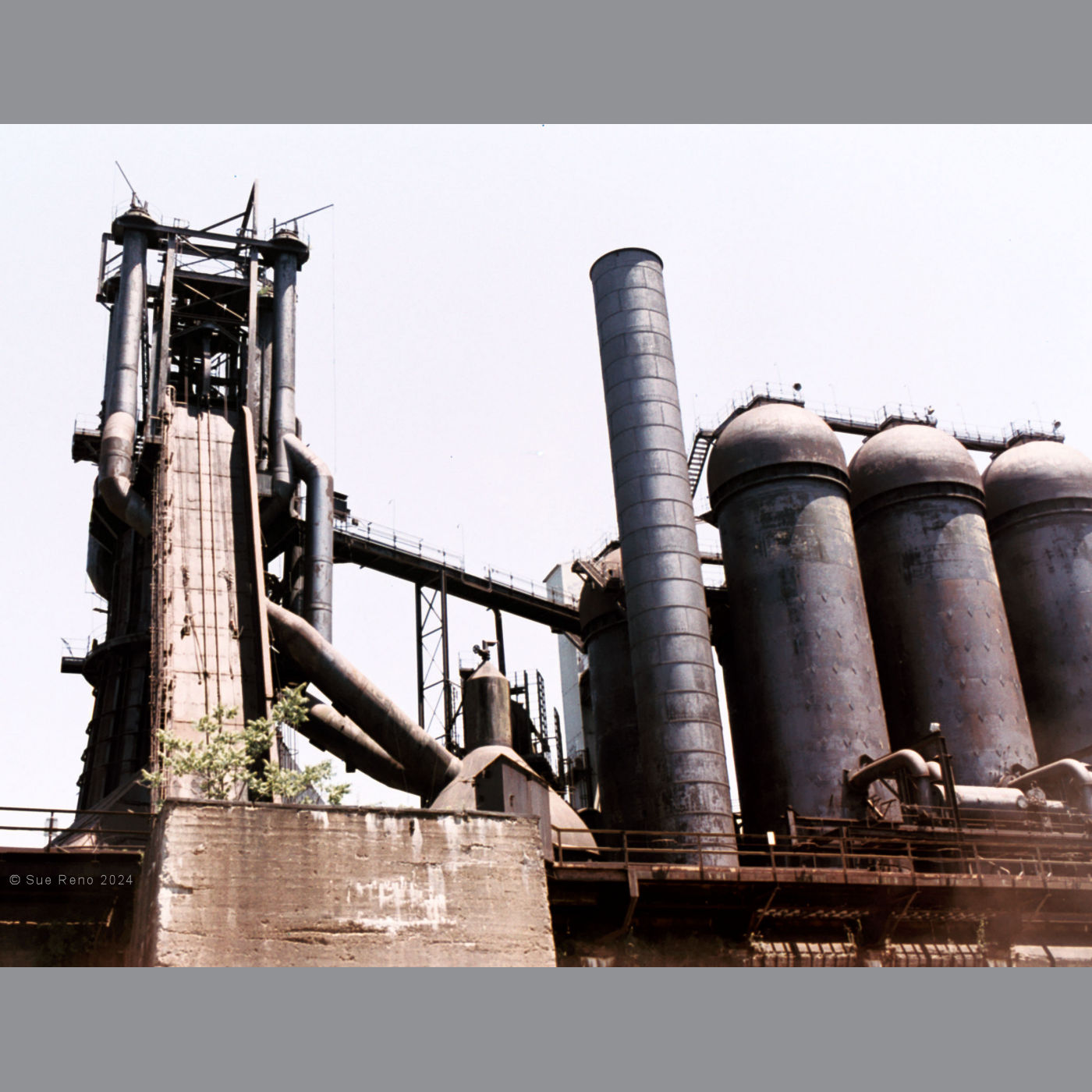
These last images are from tour of the Carrie Blast Furnaces National Historic Landmark, which I can highly recommend is you are a fan of rusting relics, fascinating historical lore, and the role of labor in industrial societies. Our tour guide was excellent! 

Sue Reno,  metropolis film, image 8
It was a stunningly hot and sunny day, and again the blue sky is very faded, but I really love the colors and tones of the machinery. It's a vintage grunge look especially suited to the subject.

Sue Reno,  metropolis film, image 9

I would try this film again if I were planning on a urban/industrial shoot. "Metropolis" is right there in the name for a reason! It's great that the resurgence of film photography is making these specialty films readily available. 

I'm now on Bluesky! Pick your platform to find and follow my content, and as always, thanks for reading.


August 2, 2024

Experiments in wet cyanotype - part 92

 Welcome to installment 92 of experiments in wet cyanotype. Today's excitement comes from my discovery of a patch of tall blue lettuce, Lactuca biennis. It's a native wild plant here in Pennsylvania, and as the name suggests, it's a biennial. In its second year it sends up a 6-10 foot tall flower stalk, with leaves descending in size as they rise, topped of with a set of small blue flowers. It has a history of being used medicinally, and is just plain cool to observe. I started with a print on a long panel of cotton sateen, using the standard cyanotype chemicals with just a touch of Solarfast solar dye.  

Sue Reno_wet cyanotype_image 1191

I made two smaller panels on some cotton I had with small woven dots in it. I will miss this fabric when it is used up.
Sue Reno_wet cyanotype_image 1192


Sue Reno_wet cyanotype_image 1193
Here are all the panels after exposure but before rinsing. They are always so dramatic at this stage.
Sue Reno_wet cyanotype_image 1194

Sue Reno_wet cyanotype_image 1195


Sue Reno_wet cyanotype_image 1196
Here are the finished panels.
Sue Reno_wet cyanotype_image 1197
I had good weather for printing, hot and sunny, and was able to capture a lot of the details in the toothed edges.
Sue Reno_wet cyanotype_image 1198
So pretty! I am pleased.
Sue Reno_wet cyanotype_image 1199
I've used these leaves once before, way back in 2005, for the eponymously named Tall Blue Lettuce. It was very popular back in the day.  I'm grateful for the opportunity to revisit this imagery. I'm also grateful for the advanced in digital photography since then! 
Tall Blue Lettuce, by Sue Reno
Tall Blue Lettuce

I'm now on Bluesky! Pick your platform to find and follow my content, and as always, thanks for reading.

July 11, 2024

Experiments in film soup - part 2


Sue Reno, film soup, image 10
It's time for more film soup goodness! This batch of photos is from a roll of Fuji film 200 in my Minolta Maxxum 50 camera, souped with lime juice, dried, and specially processed. (See my previous post for more details on how the process works.)

Sue Reno, film soup, image 11
Again with this roll, the effects are subtle-to-mid, enhancing but not substantially changing the imagery. It's a happy space for me.
Sue Reno, film soup, image 12

Sue Reno, film soup, image 13

The Greer tunnel on the Montour trail is turning into a perennial favorite subject. The addition of the metal panels done during an extensive renovation just takes everything to the next level, in person and in photos.
Sue Reno, film soup, image 14

Sue Reno, film soup, image 15
St. Francis looks appropriately ethereal.
Sue Reno, film soup, image 16

Sue Reno, film soup, image 17

The effect on bare sycamores by a creek is a great enhancement of something that I wouldn't have thought needed enhancement.
Sue Reno, film soup, image 18
A historic house, and a glimpse of a bridge through late winter trees-- it's just thrilling to me how this process adds another layer of interest and meaning.

Sue Reno, film soup, image 19

Pick your platform to find and follow my content, and as always, thanks for reading!


July 2, 2024

Experiments in wet cyanotype - part 91


Sue Reno, wet cyanotype, image 1173
Time for another round of wet cyanotype goodness! I started with a large panel of cotton sateen and some peony leaves.

Sue Reno, wet cyanotype, image 1174
Followed by a medium sized panel of cotton, with small woven details, and some fig leaves.

Sue Reno, wet cyanotype, image 1175
Next up, some mineral paper prints using Virginia creeper leaves.
Sue Reno, wet cyanotype, image 1176
And then some more peony leaves, also on mineral paper.
Sue Reno, wet cyanotype, image 1177
For all of these I used a splash of Solarfast mixed with the cyanotype chemicals.
Sue Reno, wet cyanotype, image 1178
Here they are after exposure but before rinsing.
Sue Reno, wet cyanotype, image 1179
I love the effect provided by the woven circle details in this cloth.
Sue Reno, wet cyanotype, image 1180

Sue Reno, wet cyanotype, image 1181
They are so pretty and interesting at this stage. Most of those brown and rusty tones will be lost in the rinse.
Sue Reno, wet cyanotype, image 1182

Sue Reno, wet cyanotype, image 1183

Sue Reno, wet cyanotype, image 1184
Here are the finished prints. I got just the right shade of peony pink on this one.
Sue Reno, wet cyanotype, image 1185
The fig leaves are slated for a current work in progress. I'm happy with the turmoil happening at the top.
Sue Reno, wet cyanotype, image 1186

Sue Reno, wet cyanotype, image 1187
These stayed lovely and delicate.
Sue Reno, wet cyanotype, image 1188


Sue Reno, wet cyanotype, image 1189
And these peony leaves are bold yet tranquil. I never tire of these experiments because they turn out different each and every time.
Sue Reno, wet cyanotype, image 1190


Pick your platform to find and follow my content, and as always, thanks for reading!